
advancepages

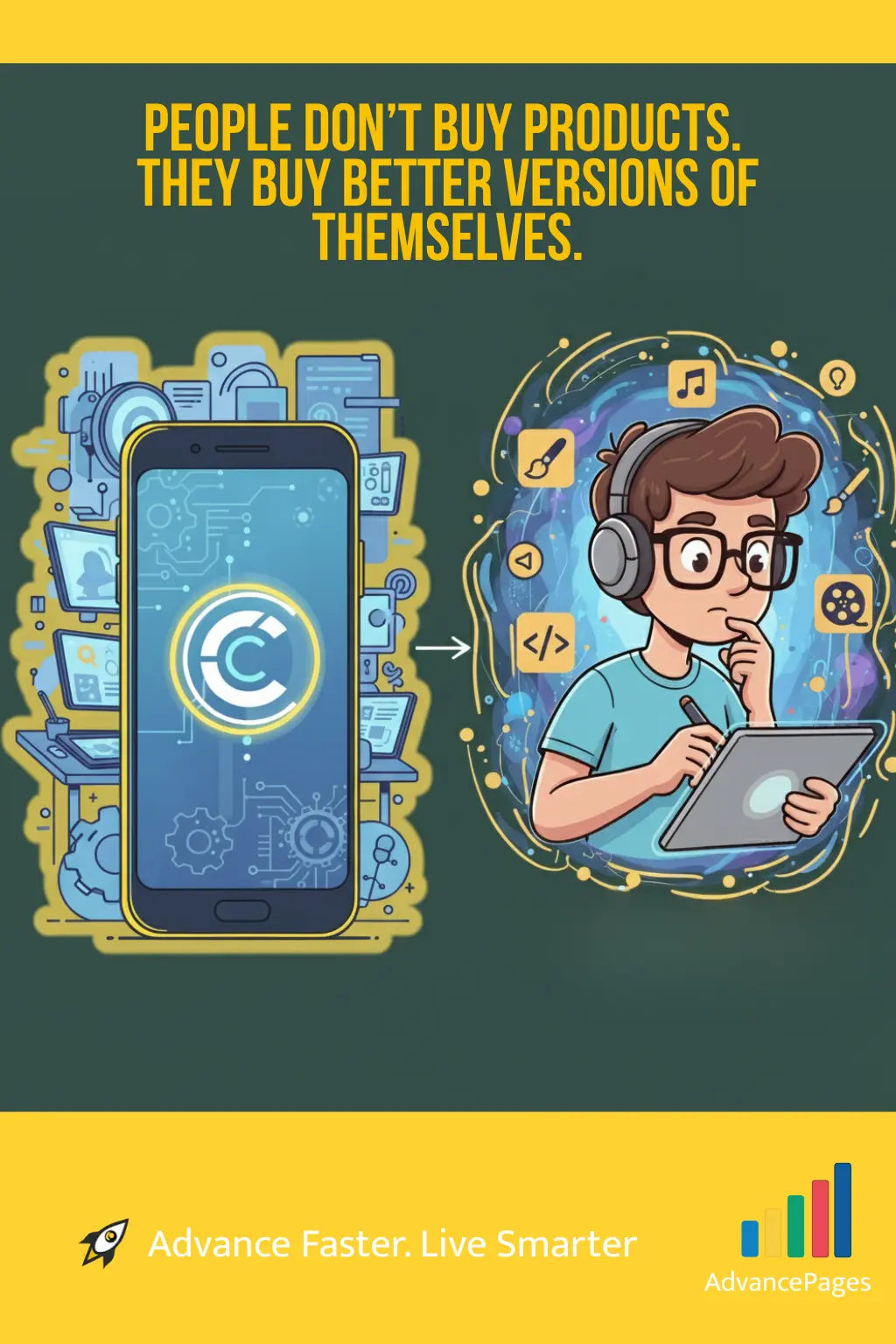
People Don’t Buy Products. They Buy Better Versions of Themselves.

Water is free. It’s abundant. It’s the most basic necessity. So how did one brand turn plain water into a global cult movement — valued over $1 billion — simply by changing who people felt they became when they drank it? That’s the power of identity-based marketing. Because in truth, people don’t buy products — they buy better versions of themselves.

The Radical Repositioning: From Commodity to Cult

Liquid Death launched with a daring idea: treat water like a counterculture brand. Their slogan was “Murder Your Thirst,” paired with skull imagery and irreverent humor. By reframing water as rebellion and identity, they broke through one of the most saturated industries on earth.

According to The Guardian (May 2024), Liquid Death reached over $263 million in annual retail sales and achieved a valuation of approximately $1.4 billion. Analysts at Axios reported that earlier funding rounds valued the company at around $700 million in 2022, showing rapid year-over-year growth.

What People Were Really Buying

It wasn’t hydration or electrolytes that customers were buying — it was identity. Drinking Liquid Death said something about you: that you were bold, ironic, environmentally aware, and funny. The can became a symbol — not of thirst, but of belonging to a tribe of nonconformists.

The Strategy Behind the Madness

Founder Mike Cessario described the brand as ‘an entertainment company that happens to sell water.’ That mindset flipped traditional marketing on its head. The company invested in viral humor, punk design, and social satire — transforming a basic product into a story people wanted to share.

Observers noted that Liquid Death’s first viral video, made on a $1,500 budget, earned millions of organic views. Early merchandise sales even outpaced the water itself — proof that people were buying the lifestyle, not the liquid.

From Viral to Valuable: Metrics That Matter

By 2021, Liquid Death’s revenue was estimated around $45 million. By 2023, retail sales exceeded $263 million worldwide. In 2024, the company’s valuation crossed the billion-dollar mark — rare for a beverage startup. Multiple marketing analysts attribute this success to how effectively the brand attached emotion and identity to a simple act: drinking water.

The Universal Lesson

You don’t need to invent a new product — you need to sell a new meaning. If your audience asks, ‘What does your product do?’ you’re competing on features. If they ask, ‘Who do I become when I use this?’ you’re competing on self-image — and that’s where loyalty lives.

How to Apply This to Any Brand

1. Discover the Identity Shift

Ask: When customers use this, who do they become?

2. Align Every Touchpoint

Visuals, tone, and environment should reinforce that identity.

3. Build Community Symbols

Merch, language, and visuals that reflect belonging.

4. Lead With Emotion

Make your promise about transformation, not specs.

People Don’t Buy Products — They Buy Transformations. Sell the identity shift, not the item.

Follow @AdvancePages on Instagram and learn how to turn what you offer into who they want to become.

About the Author

AdvancePages Staff is a collective of international consultants, strategists, and creators who explore how psychology, design, and systems thinking shape the modern world. Through the five AdvancePages pillars — Wealth (Green), Marketing (Yellow), Systems (Light Blue), Knowledge (Navy), and Health (Red) — the team publishes frameworks that help readers build scalable lives and intelligent freedom.